
SEQUENCE STRATIGRAPHIC APPROACH TO SALT TECTONICS
CASE STUDY: MISSISSIPPI VALLEY
Nicolas Daynac, Advisor – Principal Geoscientist, Eliis
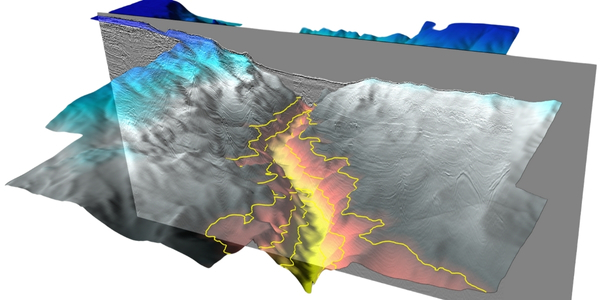
RGT modelling is used to exploit subtle depositional thins and thicks to generate realistic scenarios of salt-controlled mini-basin evolution, providing new insights into complex subsurface dynamics in the Mississippi Valley, offshore Gulf of Mexico.
CASE STUDY AT A GLANCE
LOCATION
Mississippi Valley, Gulf of Mexico
SURFACE AREA
3,800 KM2
AGE OF SEDIMENT
Miocene to Pleistocene; Allochthonous Jurassic Louann Salt
GEOLOGICAL CONTEXT
Halokinesis & minibasins
DEPOSITIONAL ENVIRONMENT
Deep marine
MAIN CHALLENGES
Halokinetic sequences & sediment reworking
LOCATION
The Mississippi Valley is located offshore the northern Gulf of Mexico, in a region shaped by active salt tectonics and high sedimentation rates.
AUTHOR

Nicolas Daynac
Advisor - Principal Geoscientist
SYNOPSIS
The Mississippi Valley lies offshore in the northern Gulf of Mexico, where salt tectonics and rapid sedimentation interact to shape a highly dynamic geological setting. This interplay results in complex hybrid structural–stratigraphic traps that present both challenges and opportunities for subsurface characterization.
This case study demonstrates how PaleoScan™ technology was applied to unravel the evolution of salt-controlled mini-basins in this region. A 3D Relative Geological Time (RGT) model was used to interpret halokinetic sequences, stratigraphic geometries, and subsidence patterns across a network of secondary mini-basins. Dynamic stratal slicing, combined with frequency decomposition and RGB-blend visualizations, revealed variations in accommodation space and highlighted turbiditic and mass-transport deposits. Multiple depositional scenarios were tested in real time, allowing the reconstruction of burial and salt movement histories at basin scale. The results support a clearer understanding of minibasin development stages, sediment dispersal patterns, and salt structure rejuvenation.
KEY TOPICS
- 3D RGT stratigraphic modeling of salt-influenced mini-basins
- Halokinetic sequence interpretation and minibasin classification
- Frequency decomposition and RGB-blend visualization for facies detection
- Scenario-based analysis of salt movement and sedimentation
- Accommodation space mapping and burial history reconstruction
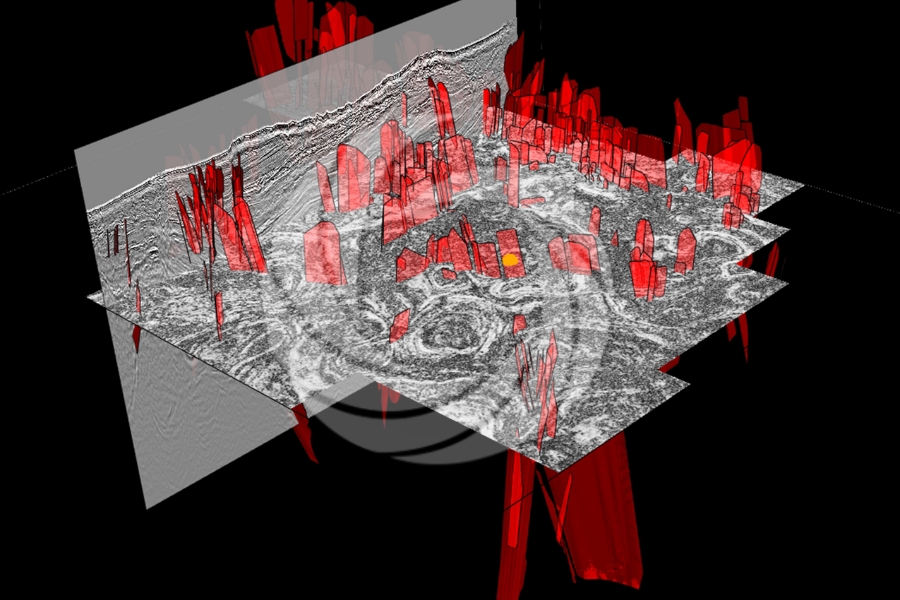
Full 3D fault modeling
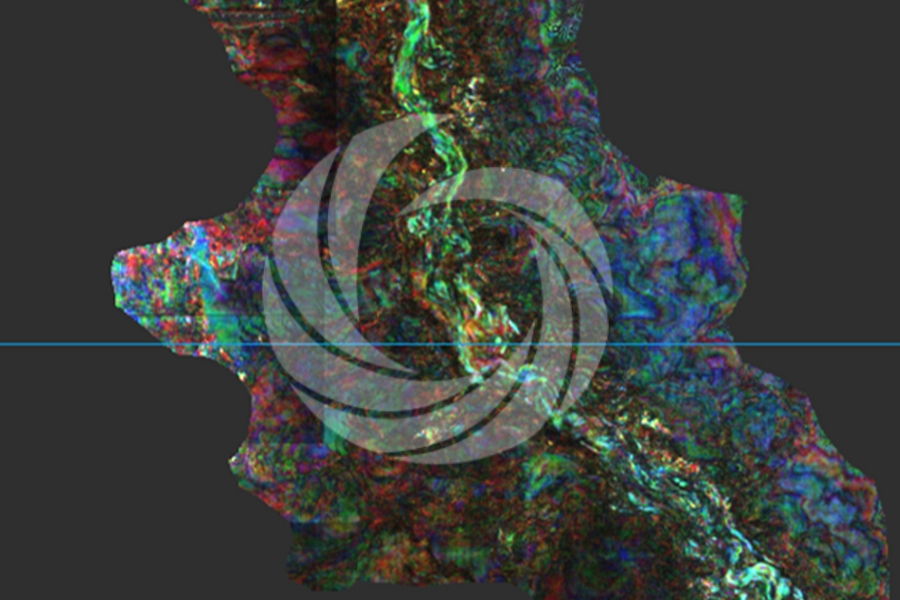
RGB blending & frequency filtering
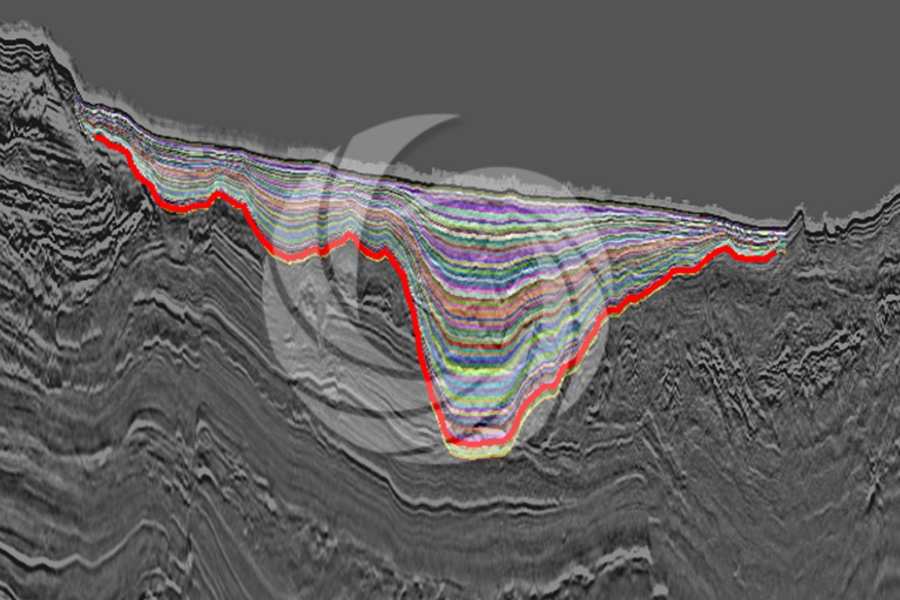
RGT modeling with complete filling history
WANT TO DIVE DEEPER? DOWNLOAD THE FULL CASE STUDY BELOW!