Santos Basin Case Study

REVIEWING COMPLEX DATA WITH AI-ASSISTED INTERPRETATION

CASE STUDY: SANTOS BASIN

Nicolas Daynac, Advisor – Principal Geoscientist, Eliis

The integration of RGT modeling and Artificial Intelligence drastically accelerates the detailed tectono-stratigraphic analysis of sedimentary basins and thus enables fast seismic data portfolio revision.

CASE STUDY AT A GLANCE

LOCATION
Búzios Field, Santos Basin, Offshore Brazil​

SURFACE AREA
1,255KM2

AGE OF SEDIMENT
Lower to Upper Cretaceous

GEOLOGICAL CONTEXT
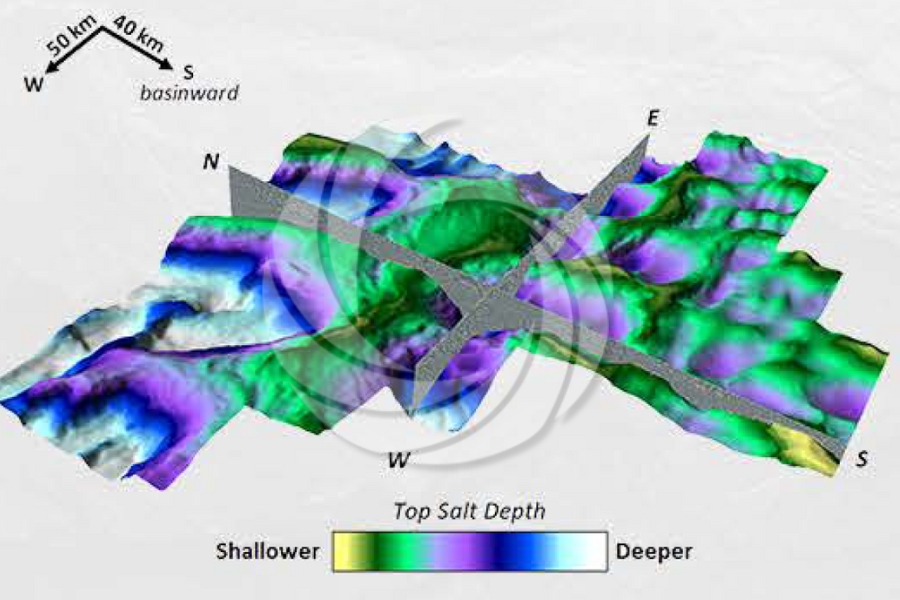
Salt-controlled minibasins, post-rift drift tectonics

DEPOSITIONAL ENVIRONMENT
Deep marine

MAIN CHALLENGES
Modeling of salt and diapirism-related faults; emphasis and characterization of turbidite sand fairways​

LOCATION

The Santos Basin is located offshore southeastern Brazil, spanning deepwater areas along the Atlantic margin and encompassing key fields such as Búzios and Franco.

AUTHOR

Nicolas Daynac

Advisor - Principal Geoscientist

SYNOPSIS

The Santos Basin, located offshore southeastern Brazil, is one of the world’s most productive offshore hydrocarbon provinces. While pre-salt reservoirs have dominated exploration for decades, improved seismic imaging and AI-driven stratigraphic analysis have revived interest in the post-salt section, particularly in areas shaped by halokinesis and faulting.

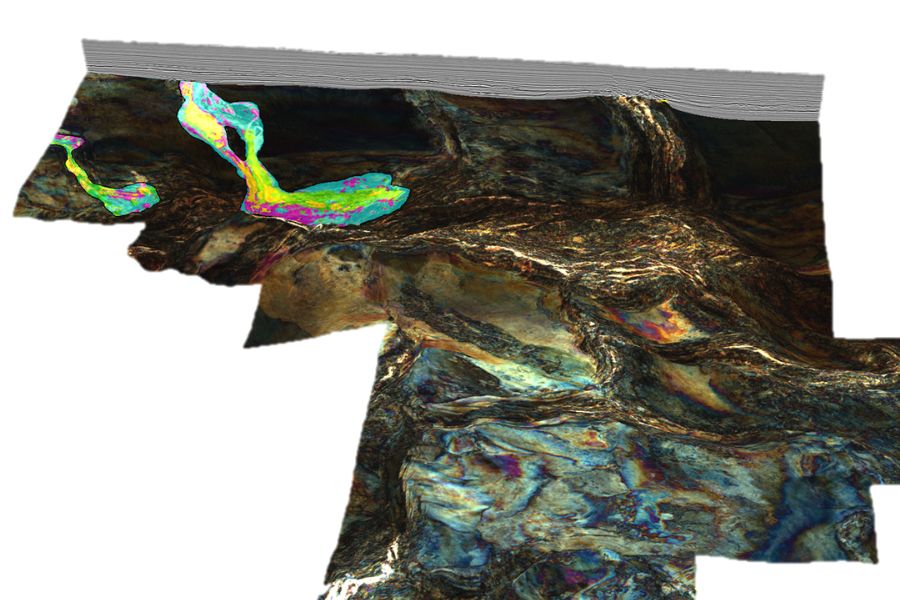
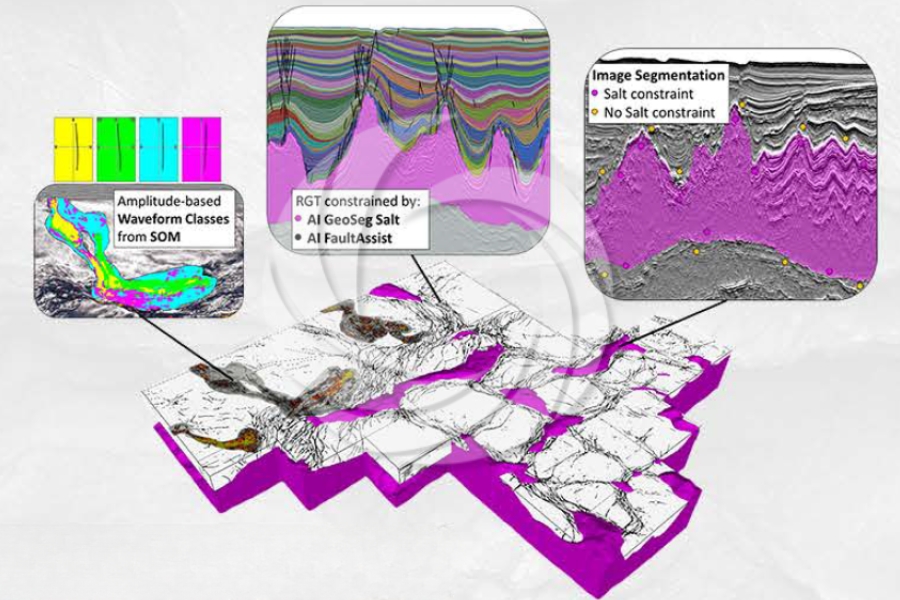
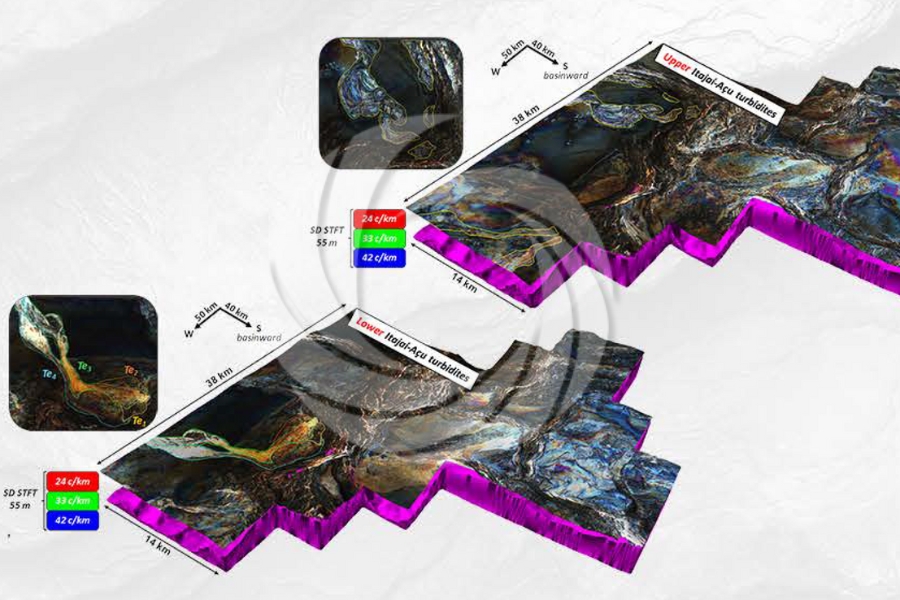
In this case study, PaleoScan™ was used to analyze a structurally complex post-salt sequence in the Búzios Field area. An AI-assisted workflow enabled detailed extraction of salt bodies and fault surfaces, which then constrained signal-driven RGT modeling. This resulted in a stratigraphically and structurally consistent 3D framework. Spectral decomposition and waveform classification were applied to highlight and characterize confined turbidite sand fairways. The integration of geobody extraction, multi-attribute analysis, and machine learning revealed how salt tectonics influenced turbidite stacking patterns, sediment confinement, and channel distribution—offering valuable insights into reservoir potential beyond the pre-salt plays.

KEY TOPICS

  • AI-assisted salt and fault extraction using GeoSeg, FaultAssist, and AFE
  • Structurally constrained RGT modeling of post-salt sequences
  • Sub-sample resolution stratal slicing and spectral decomposition
  • Geobody detection and waveform classification using Self-Organizing Maps (SOM)
  • Salt tectonics and its influence on turbidite system architecture and confinement

AI-assisted structural and geobody interpretation

RGT-empowered multi-attribute analysis

Hybrid quantitative / interpretative characterization

READY TO DIVE DEEPER? DOWNLOAD THE FULL CASE STUDY BELOW!

CASE STUDY DOWNLOAD

To access this case study in full, please fill in your details below.
Name